The modern interior environment has evolved beyond simple aesthetics, shifting toward a holistic approach to wellbeing where scent plays a pivotal role. A high-quality perfume diffuser serves as more than just a home accessory; it is a tool for atmospheric engineering that can influence mood, reduce stress, and define the identity of a living space. By utilizing sophisticated delivery systems, these devices ensure a consistent olfactory experience that enhances the overall quality of life.
From a global perspective, the demand for fragrance delivery systems has surged as urban populations seek sanctuary within their homes. The integration of artisanal glass craftsmanship with scent science has allowed the perfume diffuser to bridge the gap between functional utility and decorative art. Whether used in luxury hotels or private bedrooms, the ability to curate a specific aromatic profile is now seen as an essential element of modern interior design.
Understanding the nuances of fragrance diffusion—ranging from capillary action in reed diffusers to ultrasonic vibrations in electric models—allows consumers to make informed choices based on their specific environmental needs. As we delve deeper into the mechanics and applications of the perfume diffuser, it becomes clear that the synergy between material science and fragrance chemistry is what drives the industry forward.
The Global Evolution of Scent Delivery Systems
The journey of the perfume diffuser has transitioned from ancient incense burners to highly calibrated precision instruments. Historically, scenting a room required open flames or heavy resins, which posed safety risks and lacked control over intensity. Today, the industry leverages advanced glassblowing techniques and chemical stability to create devices that distribute fragrance evenly across large areas without compromising air quality.
This evolution is mirrored in the global market's shift toward "wellness real estate." Statistics indicate a growing preference for non-toxic, sustainable diffusion methods, pushing manufacturers to move away from synthetic aerosols toward cold-air diffusion and natural capillary systems. The result is a global ecosystem where the perfume diffuser is viewed as a staple for mental health and environmental optimization.
Defining the Modern Perfume Diffuser
In its simplest terms, a perfume diffuser is a device designed to disperse essential oils or fragrant compounds into the surrounding air. Unlike traditional candles that rely on combustion, many modern diffusers use passive evaporation or mechanical nebulization. This distinction is critical because it allows for the preservation of the fragrance's top notes, which are often destroyed by heat, ensuring a truer representation of the scent profile.
From an industrial perspective, these devices are the intersection of fluid dynamics and material science. The choice of vessel—often high-borosilicate glass for durability and clarity—ensures that the fragrance does not react with the container. The goal is to achieve a "steady-state" evaporation rate, where the scent is neither overwhelming upon first use nor absent after a few days, maintaining a consistent olfactory backdrop.
Beyond the technicality, the perfume diffuser addresses a fundamental human need: the connection between scent and memory. By providing a controlled way to introduce specific aromas into a space, these tools help in creating "scent signatures" for brands or personal sanctuary zones, making them indispensable in both luxury hospitality and home health care.
Core Components and Engineering Factors
The effectiveness of a perfume diffuser depends heavily on its material integrity. The vessel must be non-porous and chemically inert to prevent the absorption of fragrance oils, which could otherwise lead to scent contamination or degradation of the glass structure over time.
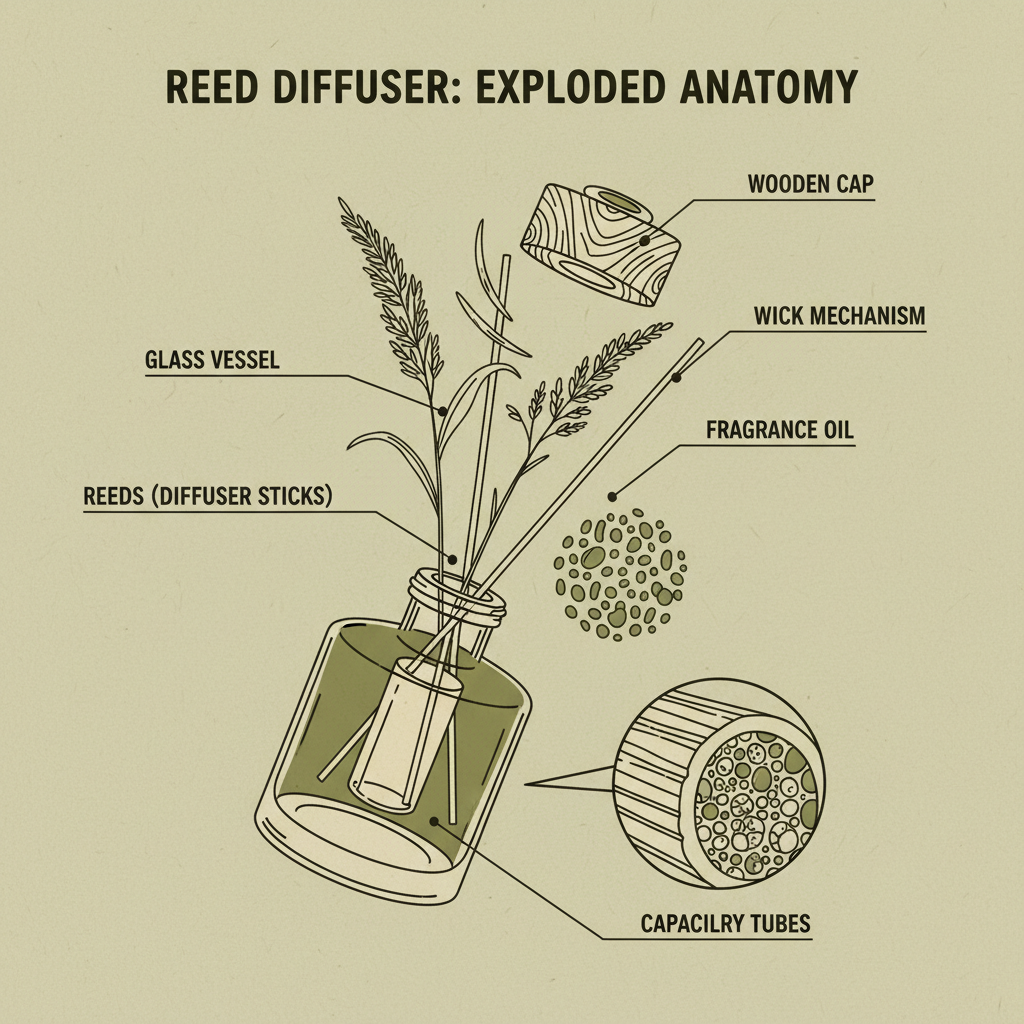
Capillary action and porosity are the secondary drivers of performance. In reed-based perfume diffuser systems, the diameter and material of the reeds determine the rate of ascent and subsequent evaporation, directly impacting the "throw" or reach of the scent.
Finally, the solubility of the fragrance carrier—often a blend of alcohol and specialized solvents—must be perfectly matched to the device. An incorrect viscosity can lead to clogging in nebulizers or sluggish evaporation in passive diffusers, rendering the perfume diffuser inefficient.
Performance Metrics and Efficiency Analysis
Evaluating the performance of a perfume diffuser requires looking at the "Scent Throw" (the distance the aroma travels) and the "Longevity" (how long the fragrance lasts before needing a refill). Different methods of diffusion yield vastly different results based on the square footage of the room and the airflow patterns.
For instance, ultrasonic models provide a high intensity of scent but consume fragrance more rapidly, whereas passive glass reed systems provide a subtle, long-term background aroma. The following data illustrates the comparative efficiency of various perfume diffuser methods based on typical user satisfaction and coverage.
Comparative Efficiency of Perfume Diffuser Methods
Global Applications and Commercial Use Cases
In the commercial sector, the application of the perfume diffuser has become a strategic tool for "Scent Marketing." Luxury retail stores in cities like Paris, Tokyo, and New York use high-capacity diffusers to create a cohesive brand identity that lingers in the customer's mind, increasing dwell time and brand recall.
Beyond retail, the healthcare industry has integrated the perfume diffuser in waiting rooms and wellness centers to alleviate patient anxiety. By diffusing calming scents like lavender or eucalyptus, facilities can transform a clinical environment into a soothing space, demonstrating the versatility of these devices from purely decorative to therapeutic applications.
Long-Term Value and Psychological Impact
The long-term value of investing in a premium perfume diffuser extends beyond simple room fragrance. There is a profound logical and emotional connection between a curated scent and mental clarity. By establishing a consistent olfactory routine, users can "trigger" specific mental states—such as focus for work or relaxation for sleep—effectively using the device as a cognitive anchor.
Sustainability also plays a role in the long-term value proposition. Moving away from disposable aerosol cans toward refillable glass perfume diffuser systems reduces plastic waste and lowers the carbon footprint of home fragrance. This shift aligns with the global move toward circular economies and conscious consumerism.
Moreover, the reliability of a high-end diffuser ensures a sense of dignity and luxury in the home. The trust established through consistent performance—meaning the device doesn't leak, the scent doesn't sour, and the glass doesn't crack—builds a lasting relationship between the consumer and the product, elevating the everyday living experience.
Future Innovations in Fragrance Technology
Looking ahead, the perfume diffuser is poised for a digital transformation. We are seeing the emergence of "Smart Diffusers" that can be controlled via smartphone apps, allowing users to schedule scent intensity based on the time of day or integrate them with smart-home ecosystems like Alexa or Google Home.
Material science is also evolving, with the development of bio-based polymers and advanced ceramics that offer even better capillary control than traditional reeds. These innovations aim to make the perfume diffuser more energy-efficient and capable of diffusing complex, multi-layered fragrances without degradation.
The ultimate goal is the personalization of scent. Future devices may use AI to analyze the mood of a room or the biometric data of the occupants to automatically adjust the fragrance profile, transforming the perfume diffuser from a passive object into an interactive wellbeing assistant.
Comparative Analysis of Perfume Diffuser Technology Generations
| Technology Era |
Diffusion Mechanism |
Environmental Impact |
Scent Precision |
| Traditional |
Combustion/Heat |
High (Soot/Smoke) |
Low |
| Passive Modern |
Capillary Action |
Low (Eco-friendly) |
Medium |
| Ultrasonic |
Water Vaporization |
Medium (Electric) |
Medium-High |
| Nebulizing |
Cold Air Pressure |
Medium (Electric) |
High |
| Smart/IoT |
Automated Pulse |
Low (Optimized) |
Very High |
| Bio-Hybrid |
Enzymatic Release |
Very Low |
Ultra-High |
FAQS
For larger spaces, a nebulizing perfume diffuser is generally more effective than a reed diffuser. Nebulizers use pressurized air to break fragrance oils into a fine mist that travels further and stays suspended in the air longer, ensuring a consistent scent throughout the room without the need for multiple smaller devices.
Yes, a reed perfume diffuser is significantly safer as it is flameless. This eliminates the risk of fire and prevents the release of soot or carbon monoxide into your living space, making it an ideal choice for households with pets or children and for use in bedrooms where you might forget to extinguish a candle.
To maintain a fresh and consistent scent throw, it is recommended to flip the reeds every 7 to 14 days. This refreshes the saturated end of the reed and prevents the fragrance from becoming stale. If the scent becomes too overwhelming, you can simply remove a few reeds to reduce the evaporation rate.
While many oils work, you should check the viscosity. Some thick resins can clog the ultrasonic plates or nebulizer nozzles of a perfume diffuser. It is best to use oils specifically formulated for diffusers or to dilute thick oils with a carrier solvent to ensure the device operates efficiently and lasts longer.
Absolutely. High-quality, non-reactive glass is essential for a perfume diffuser. Lower-grade plastics or porous ceramics can absorb fragrance molecules or leach chemicals into the oil, which can alter the scent profile and potentially cause the fragrance to oxidize more quickly.
The most obvious sign is a change in scent—if it smells "sour" or loses its complexity, it has likely oxidized. Visually, if the oil in your perfume diffuser has become cloudy or changed color significantly, it's time for a refill. Proper storage in a cool, dark place helps extend the life of the fragrance.
Conclusion
The perfume diffuser represents a sophisticated blend of art and science, transforming the way we perceive and interact with our indoor environments. From the precision of nebulization to the timeless elegance of glass reed systems, these devices provide an essential bridge to emotional wellbeing and spatial identity. By focusing on material quality, scent purity, and delivery efficiency, users can create atmospheres that promote productivity, relaxation, and luxury.
As we move toward a future of smart integration and sustainable materials, the significance of scent as a pillar of home health will only grow. We encourage you to explore the synergy of high-end glassware and aromatic excellence to elevate your space. Visit our website to find the perfect solution for your aromatic needs: www.litbright-candles.com




 +8613838384866
 sales18@litbright.com(Aromatherapy)




 Send Email
 WhatsApp