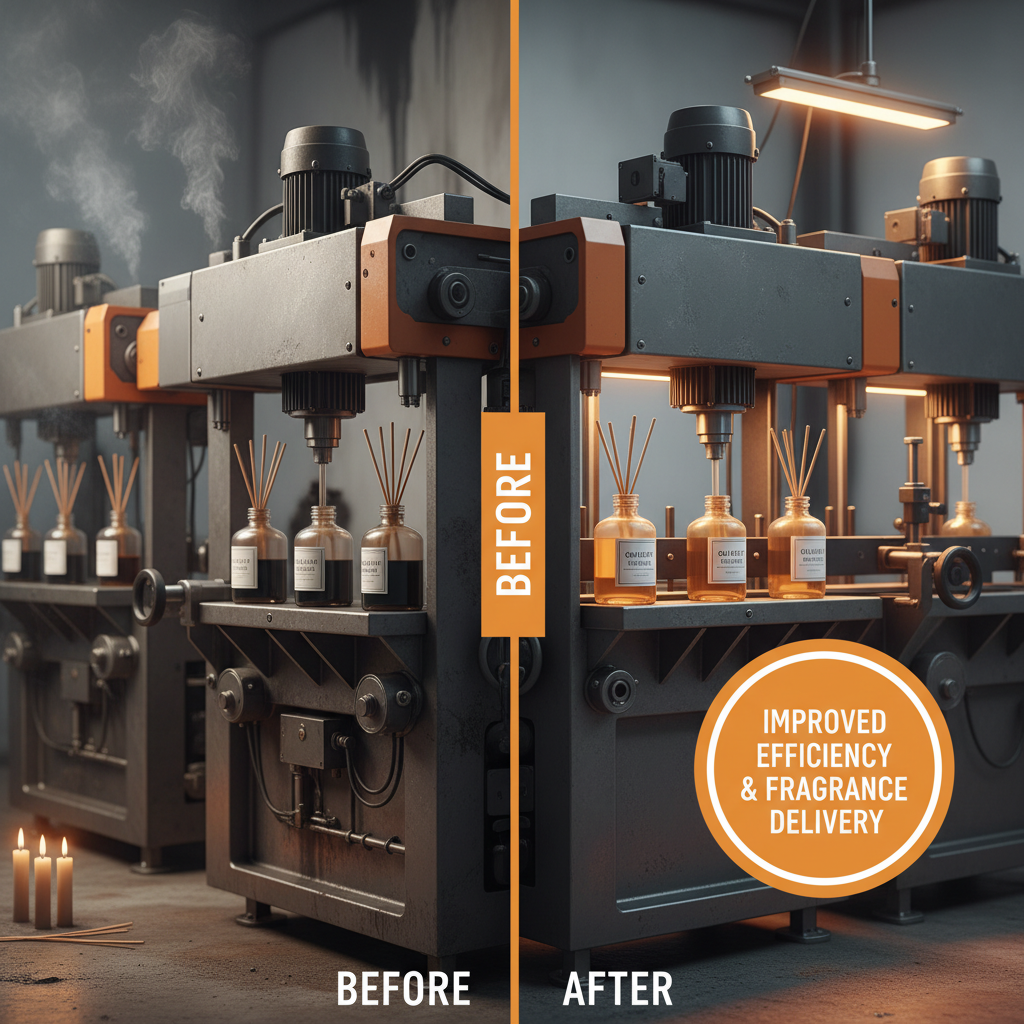
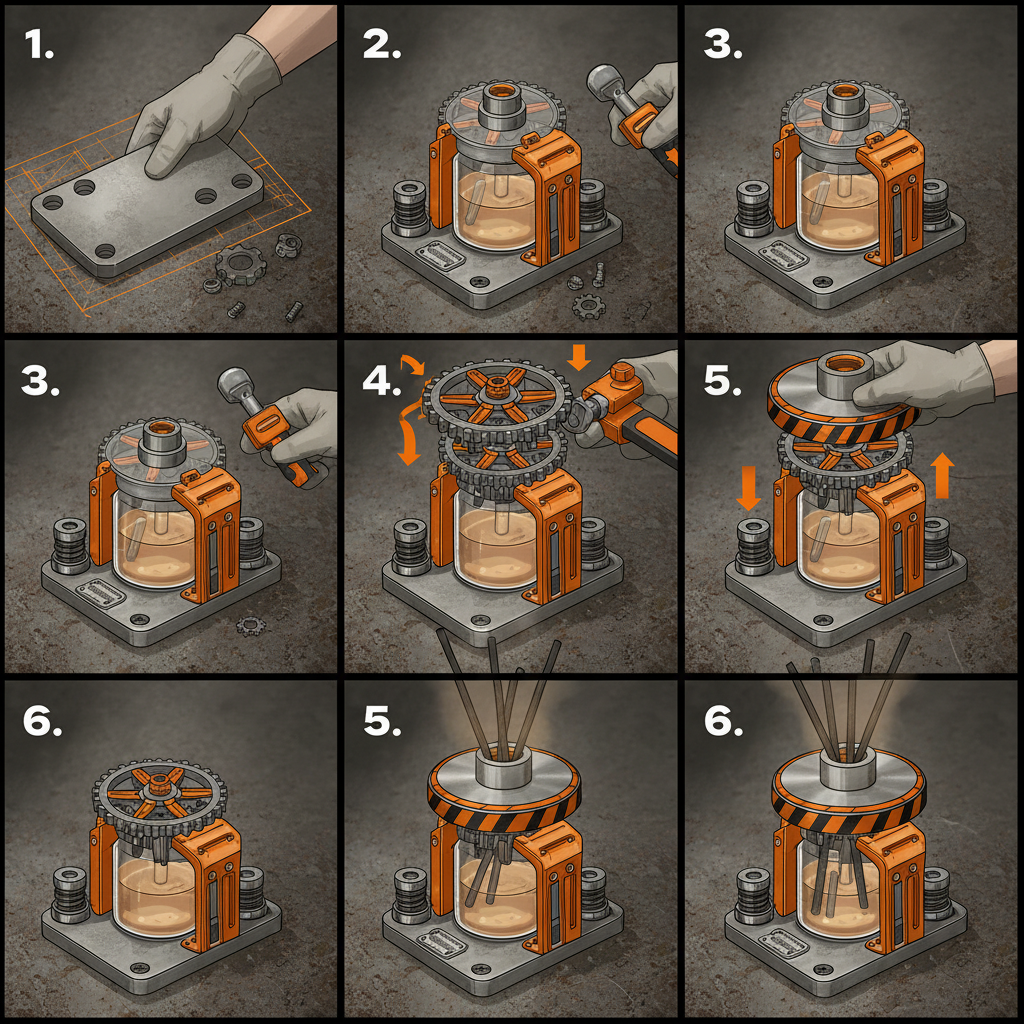
The global home fragrance market is currently experiencing a significant shift toward hyper-personalization, where the demand for a candle custom experience has moved from a luxury niche to a core consumer expectation. This evolution is driven by a growing consumer desire for scents that reflect individual identity and curated home aesthetics, forcing manufacturers to move beyond standardized production.
The technical challenge for manufacturers lies in balancing high-volume production efficiency with the flexibility required for bespoke fragrance blends and customized vessel designs. Achieving consistency in scent throw and burn rate across various custom wax formulations requires precise thermal control and material science expertise, especially when integrating diverse additives or unique aesthetic elements.
This article analyzes the technical frameworks of customized fragrance production, the critical parameters for quality assurance in private label sets, and how procurement professionals can evaluate the capabilities of specialized manufacturers to ensure product scalability and compliance.


The production of customized fragrance products is built upon a multi-layered architecture involving raw material selection, olfactory design, and precise thermal processing. At its core, the system must synchronize the volatility of essential oils with the melting point of the wax carrier to ensure a consistent release of fragrance.
In a professional manufacturing environment, this involves a controlled workflow where fragrance oils are integrated at specific temperature windows to prevent degradation. The architecture also encompasses the vessel's material compatibility, ensuring that the glass or ceramic containers can withstand thermal expansion without compromising structural integrity.
One of the primary technical constraints in candle custom projects is the fragrance load percentage. Typically, this ranges from 6% to 12%, but exceeding the wax's maximum load capacity can lead to "sweating," where unabsorbed oil beads on the surface, posing both an aesthetic and safety risk.
Flash point analysis is equally critical. Every customized fragrance oil has a specific temperature at which it can ignite; therefore, the pouring temperature must be meticulously calibrated. If the wax is too hot, the top notes of the fragrance may evaporate instantly; if too cool, the mixture may not bond correctly, leading to uneven scent distribution.
Furthermore, the interaction between the wick size and the custom wax blend determines the burn pool diameter. An incorrectly matched wick in a customized jar can result in "tunneling" or excessive soot production, making the technical validation of the wick-to-vessel ratio a mandatory step in the prototyping phase.
The fundamental engineering challenge in customized fragrance development is the trade-off between "cold throw" (the scent when unlit) and "hot throw" (the scent during combustion). Enhancing one often compromises the other, requiring a precise chemical balance of fragrance accelerators and stabilizers.
Stability is further complicated by the introduction of customized colors and additives. Certain dyes can interfere with the fragrance's chemical structure or alter the wax's melting point, necessitating a rigorous testing cycle for every new custom iteration to ensure the product remains stable across various environmental temperatures.
When evaluating different customization levels, industry professionals use normalized scoring to determine the viability of a product line. These scores typically measure the balance between design flexibility, production lead times, and olfactory consistency.
The following assessment illustrates the relative performance of different customization configurations, from standard private labeling to fully bespoke artisanal formulations.
In typical commercial deployment, custom fragrance sets are utilized as high-margin brand extensions for luxury hotels and boutique retail environments. These scenarios require a rigorous approach to "scent branding," where a specific olfactory profile is engineered to evoke a particular emotional response and maintain consistency across multiple product formats, such as jar candles and reed diffusers.
For corporate gifting or event-based production, the focus shifts toward rapid prototyping and packaging integration. In these instances, the ability to provide customized logos and packaging boxes—such as those integrated into high-end reed diffuser sets—becomes the primary value driver, requiring seamless coordination between the fragrance laboratory and the graphic design team.
The industry is moving toward the integration of biodegradable and sustainable wax alternatives, such as coconut or rapeseed blends, which present new engineering challenges regarding scent retention and burn stability. R&D efforts are currently focused on developing "smart" scents that react to environmental humidity and temperature to optimize the release of fragrance.
Another emerging trend is the transition toward "clean label" fragrance oils, eliminating phthalates and parabens without sacrificing the potency of the scent. This requires a fundamental redesign of fragrance chemistry, shifting from synthetic fixatives to natural alternatives that can maintain the olfactory profile over a longer shelf life.
Moreover, the adoption of AI-driven olfactory analysis is beginning to assist in the creation of candle custom blends, allowing manufacturers to predict how specific fragrance notes will interact during combustion before the first physical sample is poured.
Selecting a manufacturing partner for custom fragrance products requires a multidimensional evaluation. Buyers must distinguish between "assembly-only" providers and full-service manufacturers who control the chemical formulation and thermal processing.
The technical capability of the factory—specifically their ability to handle varied MOQ requirements while maintaining MSDS compliance—is a critical indicator of long-term reliability.
The following matrix provides a framework for comparing different configuration profiles based on typical industrial requirements.
| Configuration Type | Fragrance Flexibility | Production Lead Time | Recommended Use Case |
|---|---|---|---|
| Basic Labeling | Standard Palette | Short (1-2 Weeks) | Entry-level Retail |
| Scent Customization | Medium (Custom Blends) | Moderate (3-4 Weeks) | Boutique Brand Launch |
| Vessel Customization | Standard Palette | Long (6-8 Weeks) | Luxury Home Decor |
| Hybrid Customization | High (Custom Blend + Jar) | Long (8-10 Weeks) | Premium Private Label |
| Full Bespoke | Unlimited (Exclusive) | Variable (R&D Phase) | High-End Brand Identity |
| Industry Baseline | Standardized | Predictable | Mass Market Distribution |
While it varies by wax type, most professional formulations target a fragrance load of 6% to 12%. Exceeding this threshold often leads to "sweating" or oil separation, where the wax can no longer hold the liquid fragrance. For a candle custom project, we recommend rigorous testing to find the "saturation point" of the specific wax-oil combination to ensure product stability.
The wick acts as the fuel delivery system. If a wick is too small, the candle tunnels, wasting fragrance oil. If too large, it creates an oversized flame that burns the fragrance oil too quickly, potentially altering the scent profile (burning off top notes). The wick must be matched to the specific vessel diameter and custom wax density to maintain a steady heat pool.
At a minimum, manufacturers should provide a Material Safety Data Sheet (MSDS) for each fragrance oil used. This ensures that the chemicals are safe for home use and provides critical information for shipping and handling. For international markets, compliance with IFRA (International Fragrance Association) standards is the industry benchmark for safety and quality.
No. Reed diffusers require a specific solvent base (like DPM or Augeo) to facilitate the capillary action of the oil moving up the reeds. Standard candle fragrance oils are often too viscous for diffusers. A customized reed diffuser set requires a formulation that balances fragrance concentration with evaporation rates to prevent the liquid from disappearing too quickly.
Consistency is maintained through precision weighing of raw materials and strict temperature monitoring. Using automated mixing systems prevents human error in fragrance loading. Additionally, batch sampling and "burn tests" are conducted on every production run to ensure that the hot throw remains consistent with the approved prototype.
MOQs vary by manufacturer. For basic private labeling, MOQs may be lower, but for fully bespoke olfactory development, MOQs often start around 1,000 pieces. This ensures that the cost of fragrance formulation and the setup of custom production lines are economically viable while maintaining the quality standards of the final product.
The shift toward customized fragrance systems represents a fundamental change in how home ambiance products are engineered and marketed. Success in this sector depends on the ability to bridge the gap between creative olfactory design and rigorous thermal engineering. By focusing on the critical variables of fragrance load, flash points, and vessel compatibility, brands can create products that are not only aesthetically pleasing but technically superior.
For procurement professionals and brand owners, the key is to partner with manufacturers who prioritize technical documentation and iterative testing. Investing in high-quality candle custom solutions ensures that the final product delivers a consistent, safe, and luxurious experience that aligns with a brand's identity.


 +8613838384866+8613102808187(Aromatherapy)+8615544503756(Candle)
 sales18@litbright.com(Aromatherapy)sales16@litbright.com(Candle)

RM 702, Bldg,A Lingshi Comm.Bldg., NO.351 Xinhua Road, Shijiazhuang, Hebei, China



 Send Email
 WhatsApp