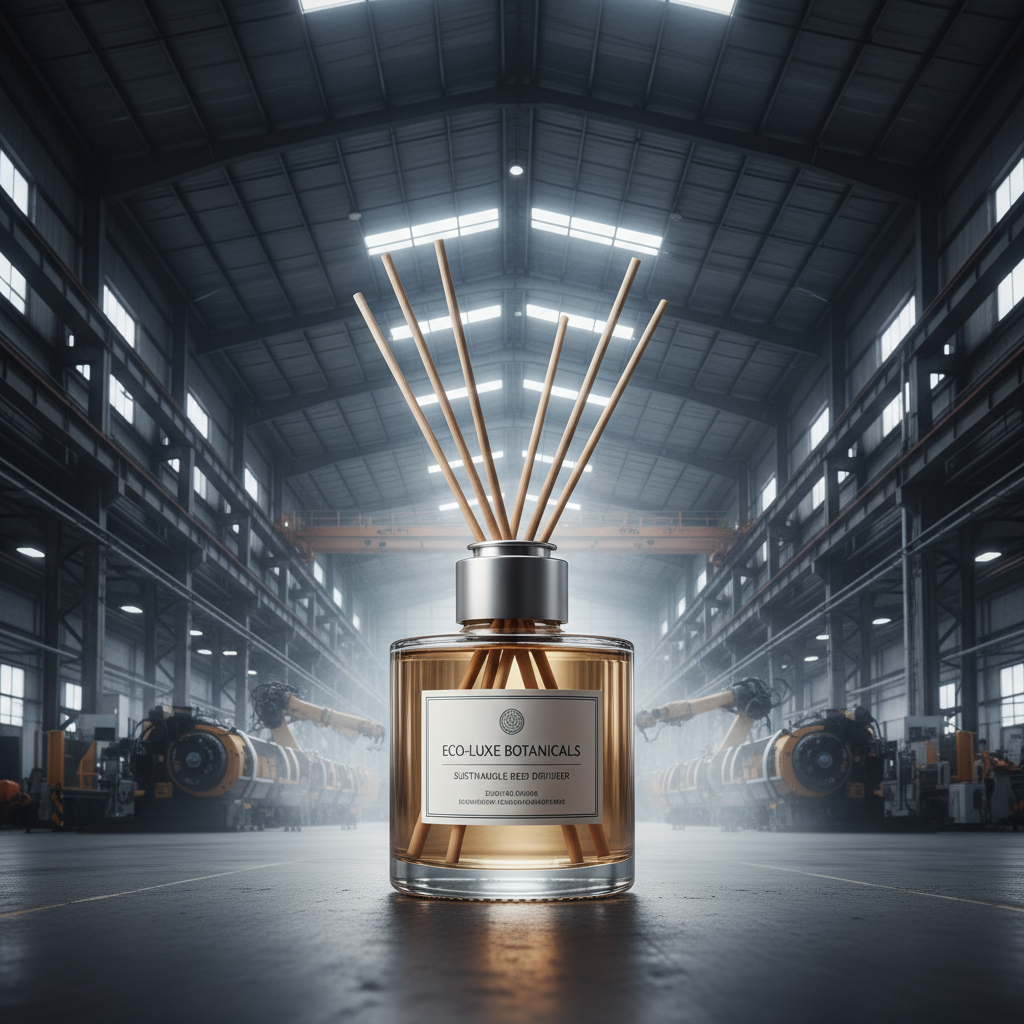
Finding yourself with a new reed diffuser not smelling as expected can be a frustrating experience, especially when you've invested in a premium home fragrance to elevate your living space. This common issue often stems from a mismatch between the fragrance oil's viscosity and the reed's porosity, or simply a lack of proper initial setup. Understanding the science of scent diffusion is the first step in transforming a silent bottle into a fragrant sanctuary.
Globally, the home fragrance market has seen a massive surge, with consumers shifting toward passive diffusion methods like reeds for their safety and convenience. However, the technical challenge of ensuring consistent scent throw remains a hurdle for many. When a new reed diffuser not smelling occurs, it is rarely a defective product but rather a result of environmental factors or incorrect usage patterns that hinder the capillary action of the reeds.
By addressing the core reasons why scent fails to travel from the bottle to the air, users can maximize the lifespan of their fragrance oils and ensure their home remains inviting. Whether it is the choice of rattan versus fiber reeds or the placement of the diffuser in a high-traffic area, small adjustments can resolve the issue of a new reed diffuser not smelling and restore the desired olfactory atmosphere.
The Science of Scent Throw and Diffusion
At its core, a reed diffuser operates on the principle of capillary action. The fragrance oil travels up the microscopic channels of the reed, where it then evaporates into the air. If you have a new reed diffuser not smelling, it usually means this capillary journey has been interrupted, either by oil that is too thick or reeds that are too dense for the specific fragrance blend.
The "scent throw" refers to the distance the fragrance travels from the source. Factors such as the alcohol content of the carrier oil and the surface area of the reeds play a critical role. When the balance is off, the result is a visually appealing product that fails to deliver its olfactory promise, leading to the common complaint of a new reed diffuser not smelling.
Common Reasons for Initial Scent Failure
One of the most frequent causes of a new reed diffuser not smelling is the failure to flip the reeds after the initial soak. Many users insert the sticks and expect an immediate aroma; however, the reeds need time to saturate completely. Flipping them after an hour ensures that the "wet" end is exposed to the air, jumpstarting the evaporation process.
Another critical factor is the quality of the reeds themselves. Low-quality rattan reeds can sometimes have blocked pores, preventing the oil from climbing. This technical flaw often leaves customers wondering why their new reed diffuser not smelling despite the bottle being full of high-concentration fragrance oil.
Lastly, placement is key. If a diffuser is placed in a room with stagnant air or in a corner with no airflow, the scent molecules simply hover around the bottle. To resolve a new reed diffuser not smelling, placing the device near a doorway or a gentle breeze can help distribute the scent throughout the room.
Optimizing Reed Selection for Maximum Fragrance
Choosing the right material is essential to prevent a new reed diffuser not smelling. Rattan reeds are the traditional choice, offering a natural look, but they vary in porosity. If your scent isn't traveling, you might be dealing with reeds that are too "tight" for the oil's viscosity.
Fiber reeds are a modern innovation designed specifically to eliminate the issue of a new reed diffuser not smelling. Made from synthetic materials, they have more consistent channels and a higher absorption rate, making them ideal for thicker, more luxurious fragrance oils.
The number of reeds also dictates the intensity. If you find your new reed diffuser not smelling strongly enough, adding more reeds increases the surface area for evaporation. Conversely, in a small bathroom, too many reeds can be overwhelming, so calibration is necessary.
Environmental Factors Affecting Oil Evaporation
Temperature and humidity play a massive role in how fragrance oils behave. In colder environments, oil becomes more viscous, which can lead to a new reed diffuser not smelling because the liquid cannot move as easily up the reeds. Warmth generally accelerates evaporation, increasing the scent throw.
Airflow is the second major environmental driver. A diffuser placed in a drafty hallway will deplete its oil faster but will be more noticeable. If you experience a new reed diffuser not smelling in a large open-plan living room, it is likely that the scent is being diluted by the sheer volume of air.
Effectiveness of Different Solutions for New Reed Diffuser Not Smelling
Maintenance Tips to Prevent Scent Clogging
Over time, dust and airborne particles can settle on the reeds, effectively "sealing" the pores and resulting in a new reed diffuser not smelling even if the bottle is still full. Regularly wiping the reeds with a dry cloth or replacing them every few months is essential for maintaining a consistent scent throw.
Another maintenance tip is to avoid placing your diffuser near direct sunlight or heat vents. While heat helps evaporation, excessive heat can break down the fragrance molecules, altering the scent profile or causing the oil to thicken, leading back to the problematic new reed diffuser not smelling scenario.
Comparing Reed Diffusers with Candle Alternatives
When dealing with a new reed diffuser not smelling, some users consider switching to candles. Jar candles and pillar candles provide a more immediate and intense scent throw because the heat of the flame actively vaporizes the fragrance. This makes them superior for rapid scenting of large rooms.
However, reed diffusers offer the advantage of "passive" fragrance. Once you solve the new reed diffuser not smelling issue, you have a constant, flameless source of aroma that requires no supervision, making it safer for households with pets or children.
For the ultimate home fragrance experience, combining both methods is recommended. Use a reed diffuser for a baseline ambient scent and light a luxury candle for specific occasions or to quickly mask odors, ensuring you never have to worry about a new reed diffuser not smelling ruining the mood.
Troubleshooting Guide for Scent Intensity
If you are still facing the issue of a new reed diffuser not smelling, it is time for a systematic check. First, verify the oil level; if it is too low, the reeds cannot draw enough liquid. Second, check for "clumping" in the oil, which may indicate the fragrance has separated or expired.
Testing the reeds in a different oil can also help determine if the problem is the material or the scent blend. Often, certain heavy base notes (like sandalwood or musk) are harder to diffuse, making a new reed diffuser not smelling more likely compared to citrus or floral scents.
Finally, consider the room's size. A standard 100ml diffuser is usually sufficient for a bathroom or bedroom, but in a large living area, you may need multiple units to avoid the feeling of a new reed diffuser not smelling.
Core Analysis of Scent Recovery Strategies
| Failure Symptom |
Root Cause |
Recommended Fix |
Expected Result |
| No scent after 24h |
Unsaturated reeds |
Flip reeds immediately |
Immediate scent boost |
| Faint scent throw |
Poor airflow |
Move to doorway/breeze |
Wider scent distribution |
| Oil not climbing |
Low reed porosity |
Replace with Fiber reeds |
Consistent capillary action |
| Scent fades quickly |
Dust accumulation |
Clean or replace reeds |
Restored fragrance flow |
| Weak aroma in winter |
Cold oil viscosity |
Move away from cold drafts |
Faster evaporation rate |
| Overwhelming scent |
Too many reeds |
Remove 2-3 reeds |
Balanced room aroma |
FAQS
This usually happens because the reeds haven't fully saturated or the air in the room is stagnant. Try flipping the reeds 24 hours after the first use and moving the diffuser to a high-traffic area where natural airflow can carry the scent molecules across the room.
Yes, increasing the number of reeds increases the surface area available for the fragrance oil to evaporate. If your new reed diffuser is not smelling strongly enough, adding a few more sticks is the most effective way to intensify the aroma.
Generally, yes. Fiber reeds are engineered to have more uniform channels, which makes them better at drawing up thicker oils. If you consistently find your new reed diffuser not smelling with rattan, switching to fiber reeds often solves the problem.
For a fresh scent throw, it is recommended to flip your reeds once a week. This prevents the top of the reeds from drying out and ensures that fresh oil is always being pushed into the air, preventing the "not smelling" phase.
Absolutely. Cold temperatures increase oil viscosity, making it harder for the liquid to travel up the reeds. If you have a new reed diffuser not smelling during winter, move it to a warmer part of the room or near a gentle heat source.
Yes, fragrance oils can degrade over time, especially if exposed to direct sunlight. If the oil has changed color or consistency, it may no longer evaporate effectively, leading to a diffuser that no longer smells regardless of the reeds used.
Conclusion
Dealing with a new reed diffuser not smelling is typically a matter of understanding the physics of fragrance delivery. By optimizing reed selection, adjusting placement for better airflow, and performing simple maintenance like flipping the sticks, you can ensure your home fragrance performs at its peak. The synergy between the right oil viscosity and the correct reed porosity is what transforms a simple bottle of oil into a continuous sensory experience.
Moving forward, investing in high-quality fiber reeds and keeping a mindful eye on environmental factors will prevent most scent-related disappointments. Whether you prefer the subtlety of a reed diffuser or the intensity of our luxury candles, the goal is always to create an atmosphere that feels welcoming and personal. For more professional home fragrance solutions and premium products, visit our website: www.litbright-candles.com.




 +8613838384866
 sales18@litbright.com(Aromatherapy)




 Send Email
 WhatsApp